.webp)



Patient ID Wristbands for Malaysian Clinics & Hospitals: Compliance, Material & Bulk Ordering Guide
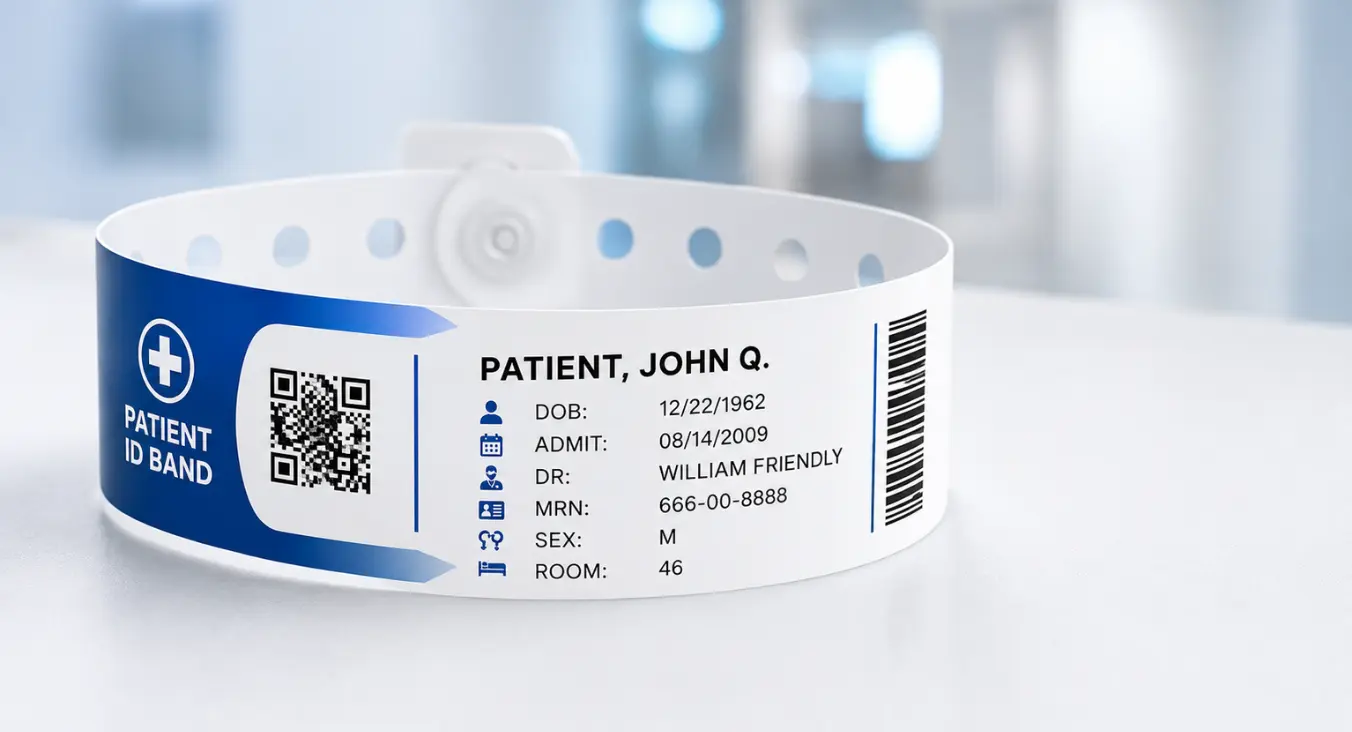
Malaysian hospitals and clinics typically use PVC or vinyl patient identification wristbands because they're waterproof, tear-resistant, and safe for extended wear — unlike paper or Tyvek bands used at events, which aren't built to survive a multi-day hospital stay. Print On Demand Malaysia supplies custom-printed PVC patient wristbands in bulk from its Kuala Lumpur facility, with colour-coding, barcode, and pre-printed field options for hospitals, private clinics, dialysis centres, and nursing homes across the Klang Valley.
If you're the one responsible for sourcing these — a purchasing officer, ward manager, or clinic admin — this guide covers what actually matters when ordering: material choice, what colour-coding conventions mean, barcode compatibility, and how bulk pricing and lead time work for healthcare facilities in Malaysia.
Why patient wristbands are a different product entirely
It's tempting to lump "wristbands" into one category, but a hospital wristband and an event wristband are solving completely different problems. An event wristband needs to survive one day outdoors and look good in photos. A patient wristband needs to:
- Stay legible and intact for the full length of a hospital stay, including through bathing, IV lines, and repeated handling
- Resist tearing or slipping off without deliberate removal (a loose wristband is a patient safety issue, not a cosmetic one)
- Print clearly enough for staff to read patient details at a glance, and — increasingly — scan cleanly if barcoded
- Be hypoallergenic, since patients wear them continuously against the skin, sometimes for days or weeks
This is why PVC and vinyl wristbands are the standard choice for healthcare settings, rather than the Tyvek paper or silicone bands used for concerts and conferences. If your facility is comparing options, our broader event wristband guide covers those other materials — but for patient identification, PVC is almost always the right starting point.
What to actually specify when you order
Snap-lock vs. adhesive closure.
Snap-lock closures are tamper-evident and standard for inpatient wards — once closed, the band can't be removed and reused without visibly breaking the clasp. Adhesive closures are more common for short outpatient visits or paediatric use where a slimmer profile matters.
Pre-printed fields vs. blank-and-write.
Higher-volume facilities usually order wristbands pre-printed with your facility's logo and standard fields (name, date of birth, MRN, ward), leaving blank space for staff to fill in patient-specific details on admission. This cuts down on handwriting errors compared to a fully blank band.
Colour-coding.
Many hospitals — in Malaysia and internationally — use colour as a fast visual alert: commonly red for allergy alerts, yellow for fall risk, and purple for do-not-resuscitate status, following conventions widely adopted from international patient-safety guidelines. Exact colour meanings vary by facility, so this should always be confirmed against your own hospital's patient safety or infection control policy rather than assumed from a general guide — but ordering wristbands in multiple standard colours so your facility can implement or maintain a colour-coding system is something worth planning for at the procurement stage.
Barcode or QR compatibility.
If your facility scans wristbands at the bedside for medication or specimen matching, confirm the print method (thermal transfer vs. direct thermal) is compatible with your existing scanners before ordering in bulk — this is worth testing on a small sample batch first.
Bulk ordering and lead time for Malaysian healthcare facilities
Healthcare facilities typically order patient wristbands by the thousand, on a recurring schedule rather than a one-off event order. A few practical points worth knowing before you request a quote:
- Pricing scales down significantly at higher volumes — a monthly or quarterly recurring order usually gets meaningfully better per-unit pricing than repeated small top-up orders.
- Because Print On Demand Malaysia prints locally in Kuala Lumpur rather than importing pre-made stock, reorders can typically be turned around faster than sourcing from an overseas medical supply distributor — worth factoring in if your facility has run low unexpectedly.
- The facility operates by appointment only — no walk-in purchasing. WhatsApp or call ahead to arrange a sample review or bulk quote, especially useful if your procurement process requires a physical sample for approval before a purchase order is raised.
For clinics or facilities with high daily patient turnover — a dialysis centre or busy outpatient clinic issuing a fresh band per visit — it may work out more practical to print on demand in-house rather than reordering pre-printed batches each time. Our DIY thermal wristband printer guide covers when that switch makes sense, even though it's written primarily for schools and community events — the same logic on cost-per-band applies.
Frequently asked questions
What material is used for hospital patient ID wristbands?
PVC (vinyl) is the standard material for patient identification wristbands in Malaysia and internationally, chosen for its water resistance, durability over multi-day wear, and compatibility with barcode and thermal printing — unlike paper or Tyvek bands, which are designed for single-day event use.
What do the colours on hospital wristbands mean?
Colour-coding is commonly used to flag conditions like allergy risk, fall risk, or care directives at a glance, with red, yellow, and purple being widely used internationally for these purposes. However, exact colour assignments vary by hospital, so staff and new admissions should always confirm against the specific facility's own policy rather than assuming a universal standard.
Can patient wristbands be barcode scanned?
Yes — PVC wristbands can be printed with linear or 2D barcodes compatible with most hospital scanning systems, provided the print method (thermal transfer or direct thermal) matches your facility's scanner requirements. It's worth testing a sample batch against your existing equipment before placing a bulk order.
How many patient wristbands should a clinic order at once?
This depends on patient volume, but most facilities order in the thousands on a recurring monthly or quarterly basis rather than one-off — bulk quantities bring meaningfully better per-unit pricing, and a recurring order schedule avoids running low unexpectedly.
Is there a minimum order quantity for custom hospital wristbands in Malaysia?
Minimum order quantities vary by supplier and print method — worth confirming directly, since pre-printed batches with your facility's branding typically carry a higher minimum than blank stock wristbands.
Where can hospitals and clinics in Kuala Lumpur order patient wristbands in bulk?
Facilities across the Klang Valley can order directly from local manufacturers such as Print On Demand Malaysia, which produces PVC patient wristbands in-house in Kuala Lumpur rather than importing from overseas medical supply distributors, allowing for faster reorder turnaround.
Sourcing for an event instead of a healthcare facility? See our full guide to event wristbands, or browse the complete wristband product range.